By PASS DELF · Etymology Series · April 2026 · 5 min read
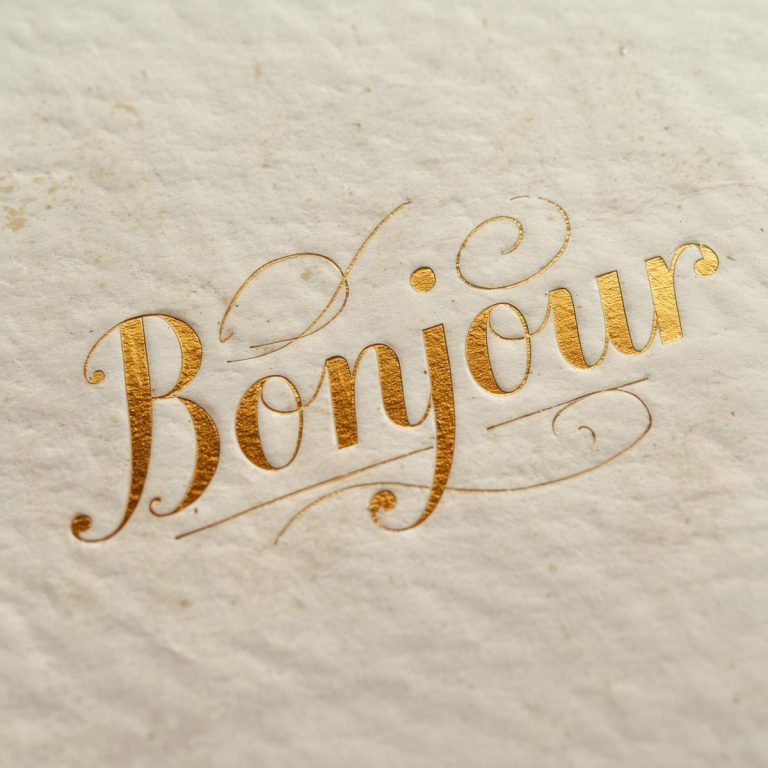
You've said it. You've heard it. You might even say it with a little accent when you're feeling fancy. Bonjour is the first French word most people ever learn — and probably the most recognised French word on the planet.
But have you ever stopped to wonder: where does it actually come from?
Two Simple Words, One Ancient Wish
Bonjour is a compound word, built from two older French words: bon (good) and jour (day). Simple enough. But the story behind each of these words goes back much further than medieval France.
Bon comes from the Latin bonus, meaning good, useful, beneficial. This same Latin root gave us the English words bonus, bonanza, and even bounty.
Jour comes from the Latin diurnus, meaning "of the day" — which itself came from dies, meaning day. Interestingly, the English word journey shares this root: a "journey" was originally the distance one could travel in a single day (une journée).
💡 Fun fact: The English word journey and the French word jour share the same Latin ancestor — dies, meaning "day."
Born in the Middle Ages
The earliest written traces of bonjour date back to the 13th century, written as two separate words: bon jor. It wasn't a casual "hello" — it was a genuine wish: may this be a good day for you.
The Académie française traces the original sense as bon jour, temps heureux — "good day, happy time." The two words gradually fused into one, and by the 15th century, bonjour had become the standard greeting used during daylight hours across France.
Not Just "Hello"
In modern French, bonjour is used from morning until late afternoon. After sunset, the French switch to bonsoir. But in Québec, bonjour is also used to say goodbye — wishing someone a good rest of their day as you part.
🇨🇦 Québec usage: "Bonjour!" said at the end of a conversation means "goodbye" — quite the opposite of its use in France.
A Word That Crossed Oceans
Bonjour entered English in the 1570s as a direct borrowing — a word so elegant that English speakers adopted it whole. Today it appears in songs, films, menus, and shop names worldwide.
Why This Matters for Your DELF Exam
Understanding where words come from helps you remember them, use them correctly, and connect them to related vocabulary. For DELF B1 and B2 candidates, cultural awareness is essential — not just for written comprehension, but for oral expression too.
Ready to practise your French for the DELF exam?
Download a Free Sample →Pourquoi dit-on « bonjour » ? L'histoire étonnante du mot le plus célèbre du français
Par PASS DELF · Série Étymologie · Avril 2026 · 5 min de lecture
Bonjour — le mot le plus connu du français dans le monde entier. Mais d'où vient-il vraiment ?
Deux mots, un vœu ancien
Bonjour est un mot composé : bon + jour. Bon vient du latin bonus. Jour vient du latin diurnus, dérivé de dies. Cette même racine a donné journée, journal, et même le mot anglais journey — à l'origine, la distance parcourue en un jour.
💡 Le saviez-vous ? Le mot anglais journey et le français jour partagent la même racine latine : dies, le jour.
Né au Moyen Âge
Les premières traces écrites remontent au XIIIe siècle, sous la forme bon jor — un vœu sincère : que ce jour soit bon pour vous. L'Académie française date le sens original de bon jour, temps heureux. Les deux mots ont fusionné progressivement, et dès le XVe siècle, bonjour était la salutation standard de la journée.
Un mot, plusieurs usages
En France, bonjour s'utilise du matin jusqu'en fin d'après-midi. Mais au Québec, il sert aussi de formule d'adieu — on souhaite une bonne journée à la personne que l'on quitte.
🇨🇦 Usage québécois : "Bonjour !" en fin de conversation signifie "au revoir" — à l'opposé de son usage en France.
Ce que cela apporte à l'examen DELF
Connaître l'origine des mots, c'est mieux les retenir et établir des liens avec d'autres termes de la même famille. Pour les candidats au DELF B1 et B2, la richesse lexicale et la conscience culturelle sont des atouts essentiels à l'écrit comme à l'oral.
Prêt(e) à vous préparer au DELF ?
Télécharger un exemple gratuit →